
A letter from our founder
Israel at Heart: Looking Forward
Our answer to a changing world
Joey Low, Founder
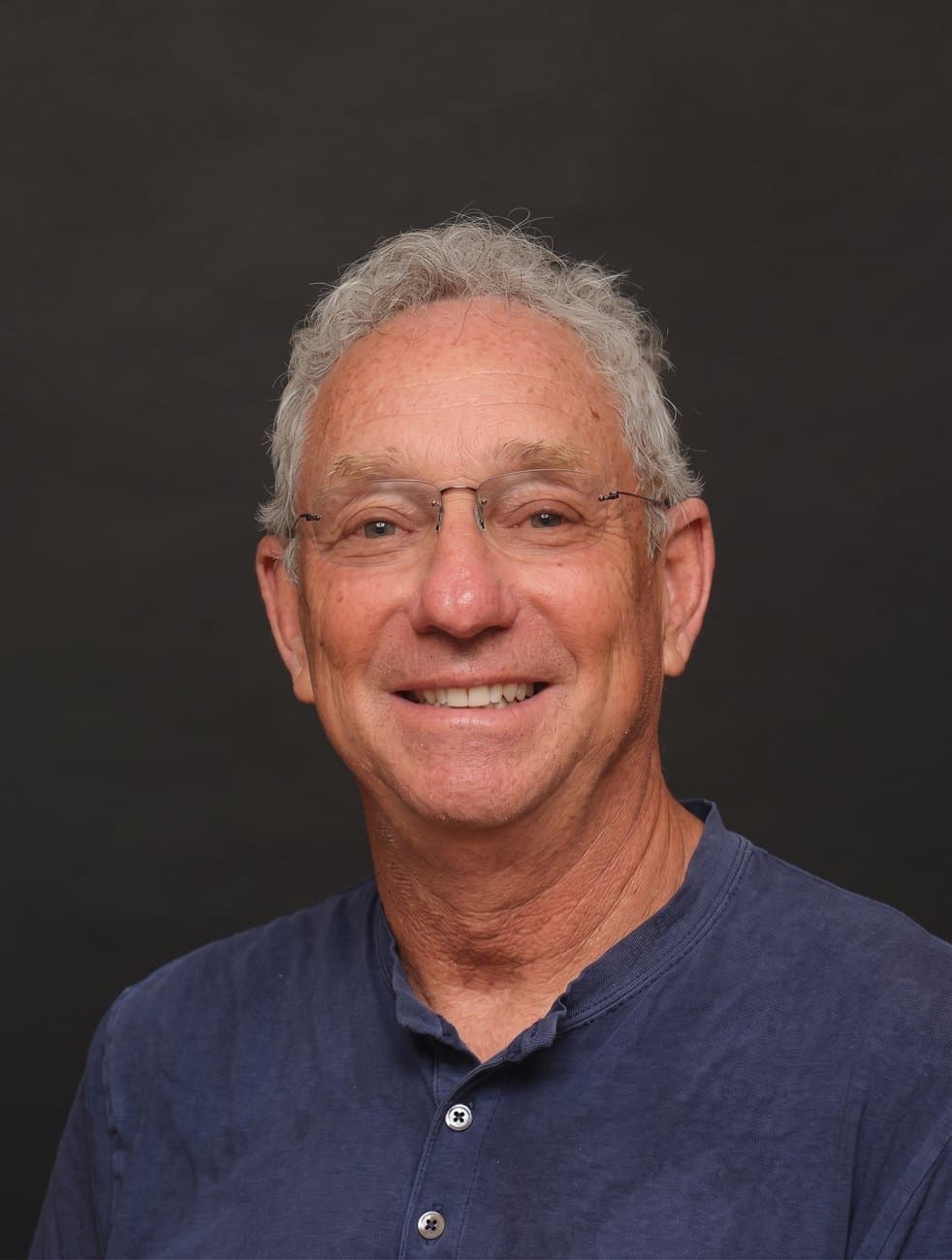
Israel at Heart has accomplished a great deal over the past twenty-five years, and we have learned many valuable lessons. Looking forward requires us to examine those things that worked and also those things that today are no longer relevant.
What changed since 2002
The clearest and sharpest difference is what happened when we began sending students to campuses all across America in 2002. At that time, there was a huge interest on the part of students to meet Israelis and engage in conversations that would help answer many of the questions they had. Today, that environment has largely disappeared. The hostility on many campuses makes those encounters much more difficult, and in some cases impossible.
So the question today is: how can we explain Israel's position and fight against the press, television reporting and social media attacks against Israel's very right to exist?
A harder environment
Of course, there are certain outlets that give Israel a better chance to defend itself, and arguments are sometimes presented in a more balanced way. But in general, the media environment has become extremely difficult for Israel to navigate. Whether it is on TikTok, in the press or on many college campuses themselves, the environment has become so hostile that even attempting to engage in conversations can be dangerous.
The extent of antisemitism and openly hostile demonstrations against Israel in so many places makes defending Israel increasingly difficult. And this is not only happening in America. Many parts of Europe face the same challenge.
How do we meet that challenge? How can we make progress in fighting a hostility that is often driven by people who are not familiar with the facts, or who distort the facts, yet continue loudly to protest against Israel?
Foreign government funding of American universities over many years has also contributed to an increasingly uncomfortable environment for Jewish students. The same old answers are no longer relevant. And fighting what we once thought was the problem has now morphed into something new and far more dangerous.
New approaches need to be developed. But just because something is new does not mean it is necessarily the answer. We are dealing with a very determined enemy with enormous resources to shape the way our universities operate and to influence professors and entire academic departments.
Antisemitism adapts, and so must we
Antisemitism throughout the generations has always taken different forms and has consistently changed to fit the norms of the times. With social media today so influential, the speed at which new tactics against us emerge has increased dramatically, and they have become much more difficult to counter quickly.
Our strength throughout the ages has been our ability to adjust and adapt to the challenges we face. Today, those challenges are multiplying. And on top of all that, we now have Jews who are openly and vocally critical of Israel. I guess we have always had that, but the extent to which Jews have become publicly critical of Israel is another challenge that we must deal with.
“Our greatest strength has always been the resilience of our people.”
Our answer: be the best
I believe our best chance to fight antisemitism, in all the forms it takes, is to be the best we can be. We need to continue excelling in all the fields in which we are involved.
Whether it is healthcare, where Israeli institutions such as Sheba Medical Center have become internationally recognized, or Israeli startups in virtually every area of technology and innovation, Israelis and Jews continue to achieve extraordinary things despite our relatively small numbers.
Going field by field, Israelis and Jews are statistically outperforming expectations based on our small numbers. The number of Nobel Prize winners and the companies and innovations that have had huge impacts in so many fields must be part of our answer.
Mark Twain wrote about this phenomenon more than a century ago in his famous essay Concerning the Jews, published in 1899. He marveled at the disproportionate contribution of the Jewish people to literature, science, art, music, finance, medicine and learning.
Yisroel Aumann, the Israeli Nobel Prize winner in Economic Sciences in 2005 and a very good friend, has expressed an idea that has always stayed with me. He has said that the only way to defeat antisemitism would be to stop being successful and to stop sticking together, and he is not prepared to do either.
Therefore, the way forward is to continue striving to be the best at whatever we do.
Where Israel at Heart comes in
Anything we can do to help companies and individuals who need support to reach the top of their fields should be something we pay attention to and support as best we can. If an Israeli company has the potential to become a global leader, we should help it get there. If an individual has extraordinary talent and the ability to make a difference, we should help give that person the opportunity to succeed.
This is where Israel at Heart can play an important role.
Our mission should not only be to defend Israel. It should also be to strengthen the people, companies and ideas that make Israel impossible to ignore.
Every successful company, every breakthrough, every exceptional individual and every contribution Israel makes to the world becomes another reason for people to see Israel differently.
We cannot control what our opponents say about us. We cannot control what appears on TikTok, what a professor teaches or what headline appears in a newspaper. But we can control what we do. And we can make sure that what we do is constructive, ambitious and beneficial to the world around us.
The way forward
The challenge before us is enormous. But so is the opportunity.
For twenty-five years, Israel at Heart has learned how to adapt to a changing world. The environment today demands that we adapt again. The tools and strategies that worked in 2002 may not be the tools and strategies that will work in 2026 and beyond.
But the fundamental principle has not changed.
“We are strongest when we are resilient, ambitious, united and successful.”
Our answer to those who want Israel to become smaller, weaker and less influential should be the opposite: we should become better, stronger, more innovative and more influential.
Israel at Heart will continue to support the businesses and individuals who have the ability to reach the top of their fields and, through their success, positively influence the world around them.
That is our best opportunity.
And I believe it is our answer.
Joey Low